A fire alarm system has a number of devices working together to detect and warn people through visual and audio appliances when smoke, fire, carbon monoxide or other emergencies are present.
These alarms may be activated automatically from smoke detectors and heat detectors or may also be activated via manual fire alarm activation devices such as manual call points or pull stations.
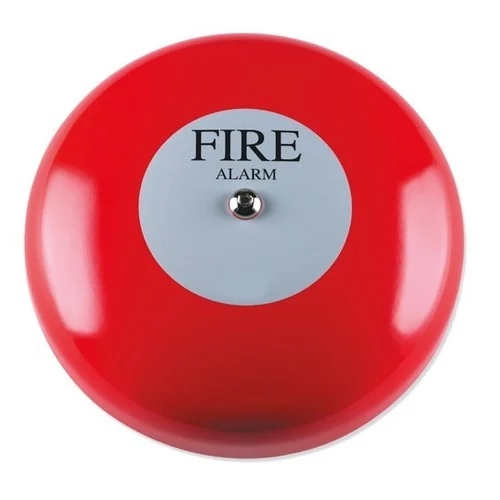
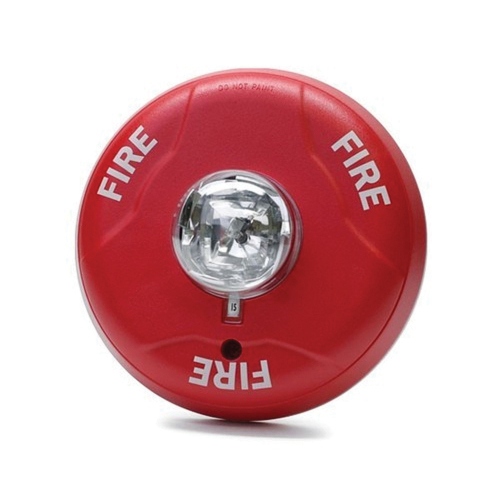
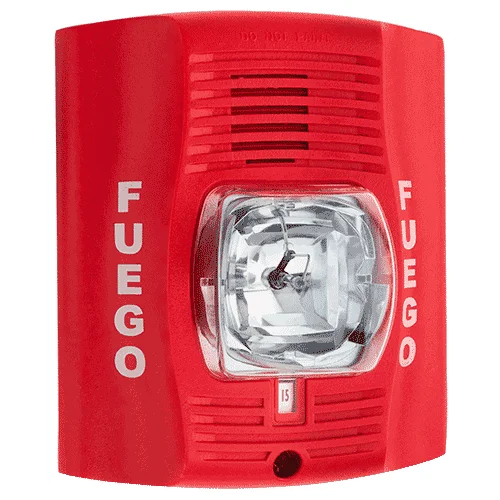
Alarms can be either motorized bells or wall mountable sounders or horns. They can also be speaker strobes which sound an alarm, followed by a voice evacuation message which warns people inside the building not to use the elevators.
Fire Alarm Control Panel
The brains of the system Provides power to the system, monitors inputs and controls outputs through various circuits.
Performs other functions as required by the appropriate code.
Addressable Fire Alarm System
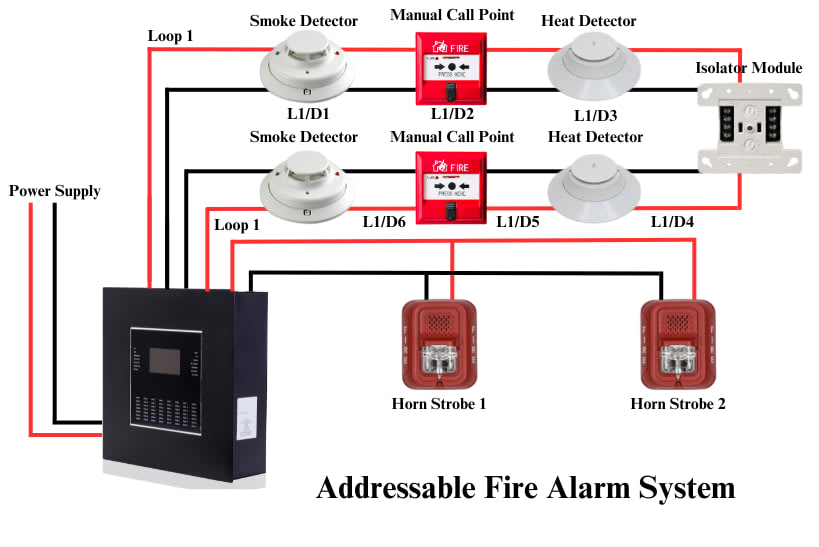
An Addressable Fire Alarm System is an advanced detection system in which each connected device has a unique digital address. This allows the Fire Alarm Control Panel (FACP) to identify the exact location and status of every device across the premises. When a fire or fault occurs, the specific device address is displayed on the control panel, enabling quick identification and response to the affected area.
1. Unique Device Addressing
Each device — whether a smoke detector, heat detector, manual call point, or module — is assigned a unique identification number (address) that helps in the precise reporting of alarms or troubles.
2. Signaling Line Circuit (SLC) Loop
The system operates using an SLC loop, which connects all addressable input and output devices to the Fire Alarm Control Panel through a single communication line, simplifying wiring and improving reliability.
3. Two-Way Communication
Addressable devices continuously communicate with the control panel by transmitting electronic signals indicating their real-time condition — Normal, Alarm, or Trouble — whenever polled by the system.
Conventional Fire Alarm System
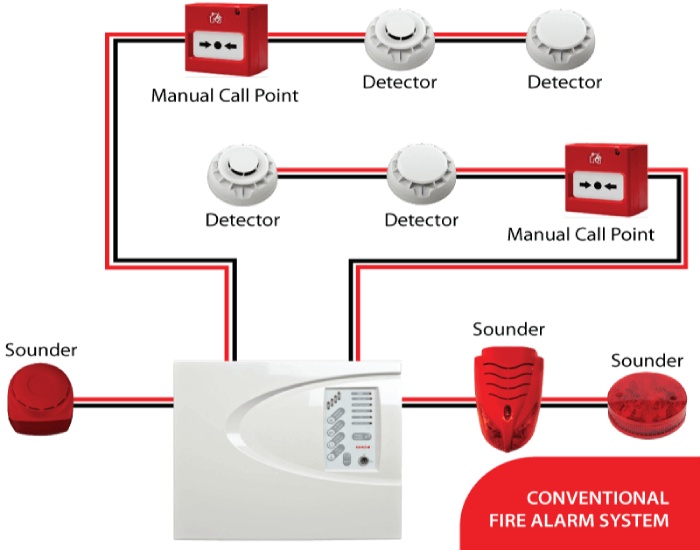
With a conventional system, there is no way of pinpointing the exact location of the fire. By wiring your building into different zones, one can get a general idea of where the fire is. For instance, if you have two floors, you could wire the first as ‘zone and the second as zone 2. So, if a fire occurs in zone 1, you know that the fire is somewhere on the first floor.
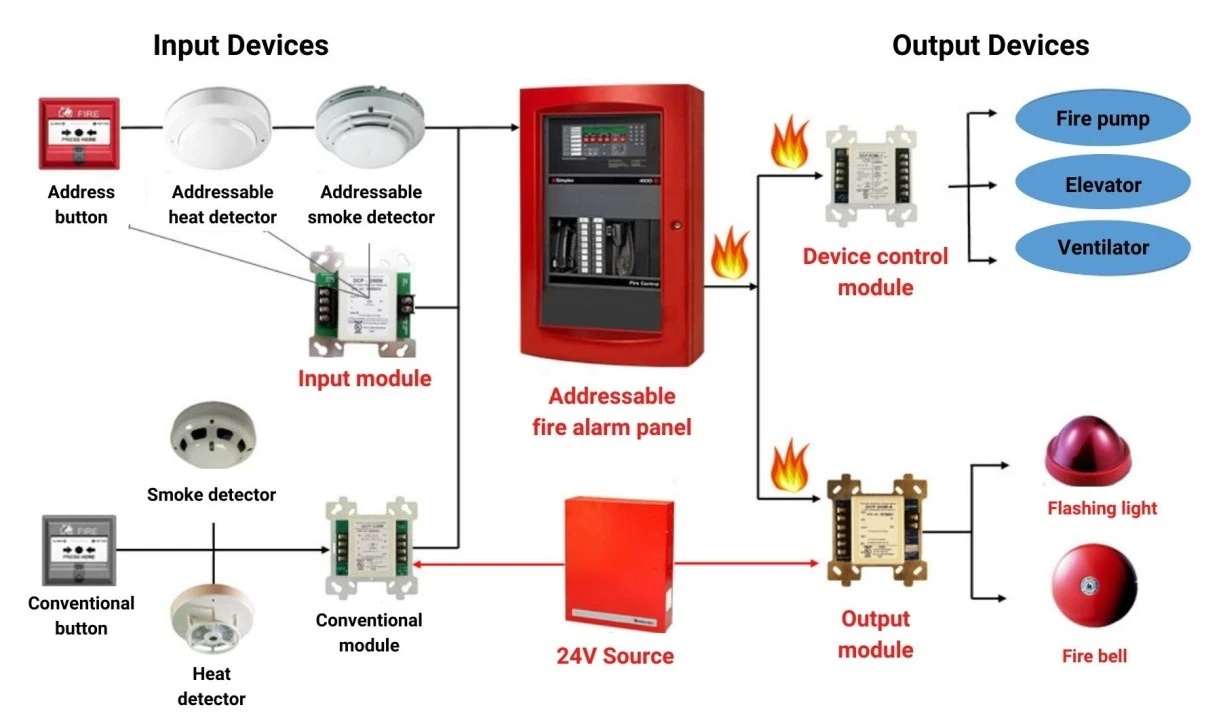
Input Device
A fire alarm system can have a variety of input devices. We divide it into two parts, one is Initiating Device and one is Initiating Device Circuit (IDC). A system component that originates transmission of a change of state condition, such as a smoke detector, manual fire alarm box, supervisory switch, etc is known as Initiating Device. A circuit to which automatic or manual initiating devices are connected where the signal received does not identify the individual device operated is known as a Initiating Device Circuit (IDC)
Multi-Sensor Detectors
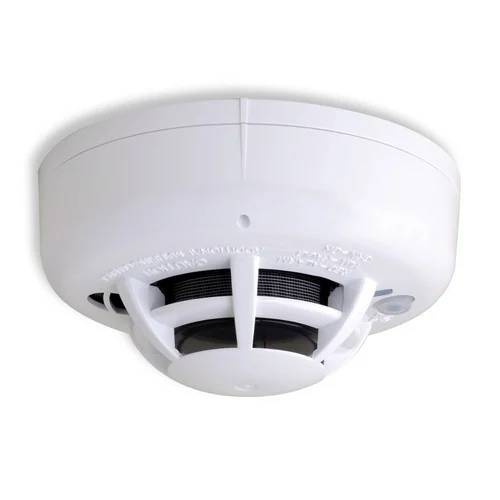
The Multi-sensor detectors combine inputs from both optical and heat sensors and process them using a sophisticated algorithm built into the detector circuitry.
Smoke Detector
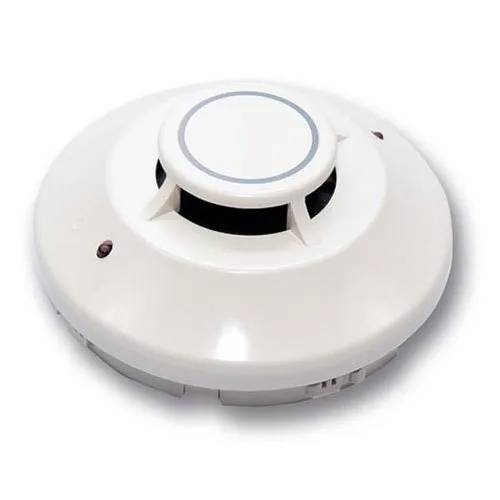
A detector or a sensor that senses smoke and act as an indicator of fire. It basically issues an audible or a visual signal to the fire alarm control panel in case of fire.
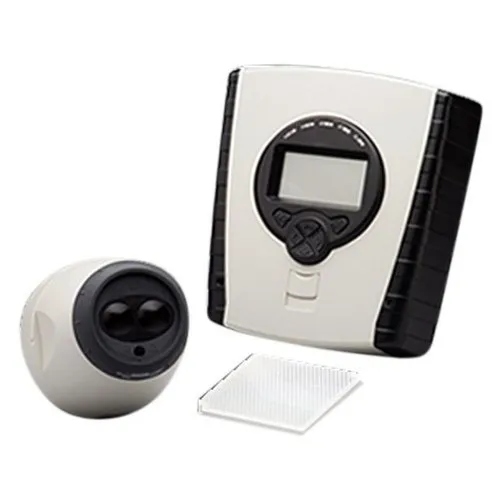
Beam Detector
System Sensor is offering a new single-unit Transmitter/Receiver Beam Detector that works in conjunction with a reflector.
Duct Detector
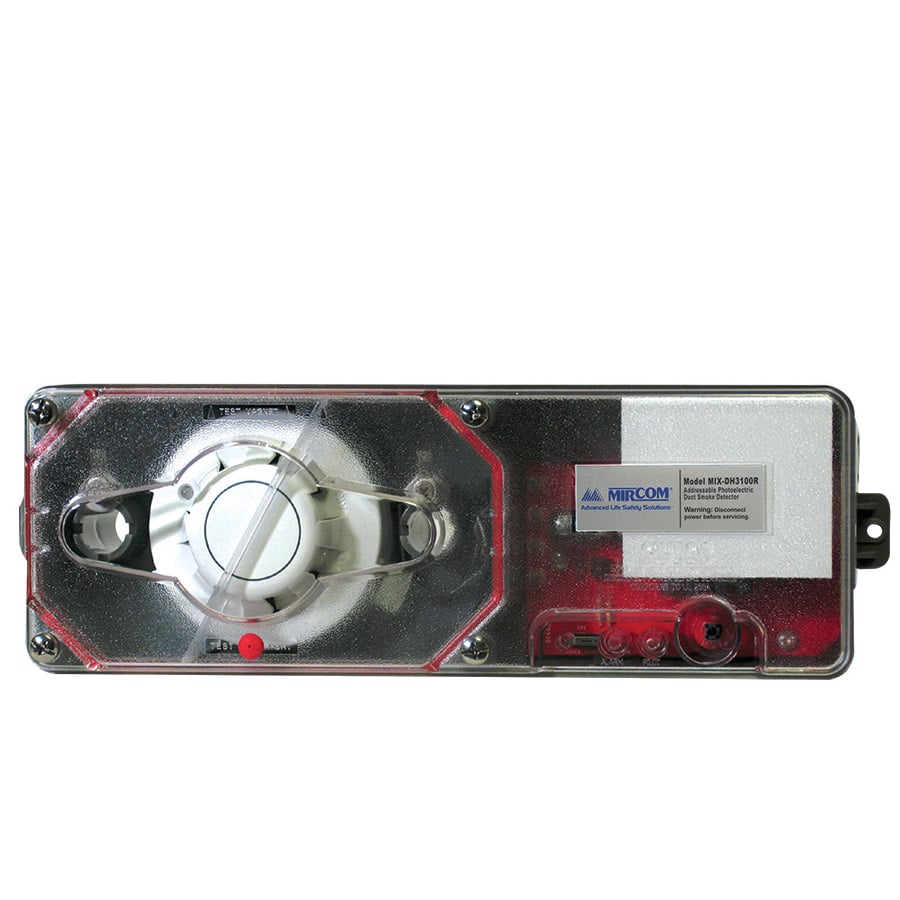
Photoelectric detector mounted in housing outside the ductwork that has probes that extend into the duct to air inside the duct. Primarily used as a smoke control device to control the flow of air in ductwork.
Heat Detector
Heat detectors are the oldest type of automatic fire detection device. Not considered direct Life Safety devices, these detectors do contribute to the detection of a fire.
Monitor Modules
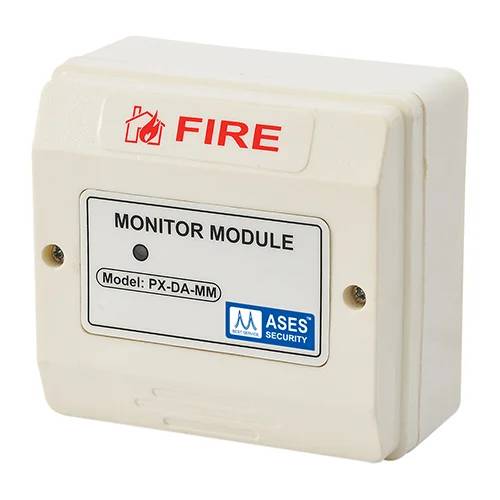
They supervise a circuit of dry-contact input devices, such as conventional heat detectors and pull stations, or monitor and power a circuit of two-wire smoke detectors.
Optical beam smoke detector
A device that uses a projected beam of light to detect smoke across large areas, typically as an indicator of fire. They are used to detect fires in buildings where standard point smoke detectors would either be uneconomical or restricted for use.
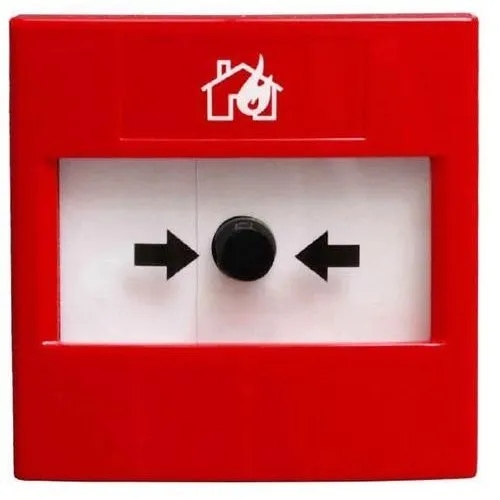
Manual Call Point
Manual alarm call points are designed for the purpose of raising an alan manually once verification of Manual Call Point: Manual alarm call points are designed for the purpose of raising an alarm manually once verification of lire or emergency condition exists by operating the push button or break glass to raise an alarm signal.
Output DeviceDevice
Output devices are the components that respond when a fire alarm is activated. They alert building occupants, activate safety systems, and assist in emergency response actions. These devices are connected to the Fire Alarm Control Panel (FACP), which sends signals to trigger them when a fire or fault condition is detected.
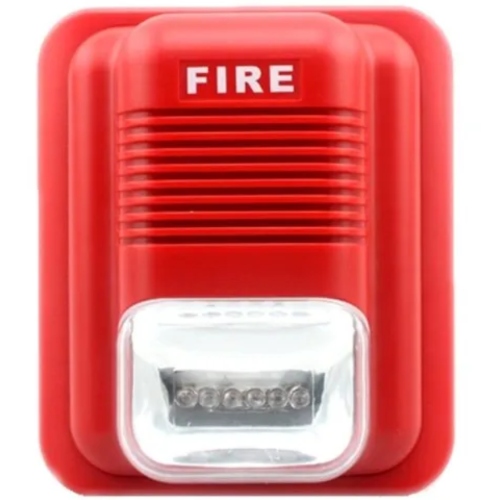
Fire Alarm Hooter
The Fire Alarm Hooter is a device which produces sound when a sensor senses any kind of fire activity.
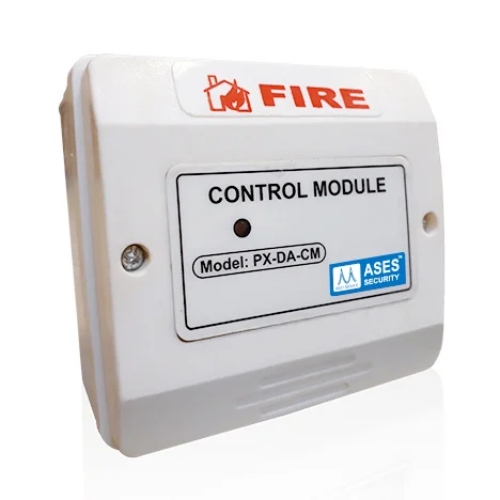
Control Module
It activates warning devices like a bell or horn strobe. It can also activate relays connected to automatic door closers. elevator controls, fire suppression systems, smoke ejectors, and the like.
Bells
Only used if they are only for fire, or have a distinctive sound from other bell signalling devices. Often used as an external gong to indicate the flow of water in the sprinkler system.
Horns
Loud and distinctive output. Often used in high-noise environments. such as manufacturing plants
Horns Strain
Visual signaling appliances are used in high-noise environments, in areas occupied by hearing-impaired individuals, or in areas where audible devices may not be desired.